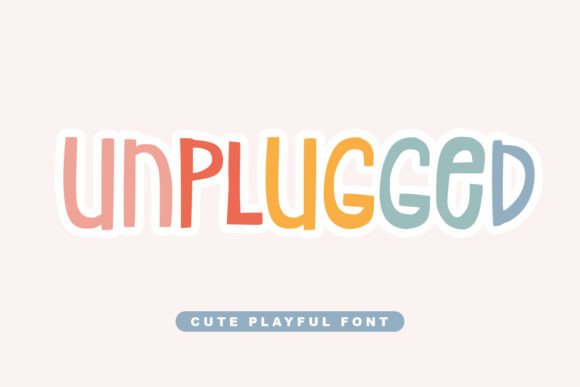
Unplugged: Integrating a Casual Handwritten Font into Modern Design Workflows
In the landscape of digital typography, clarity often competes with personality. For designers, marketers, and small business owners, the challenge lies in selecting typefaces that communicate brand identity without sacrificing readability or professional polish. Unplugged emerges as a strategic solution in this space. As a casual handwritten font, it bridges the gap between structured corporate aesthetics and approachable human connection. Understanding how to integrate Unplugged into your broader creative process requires more than just installation; it demands a clear view of where informal typography adds value and where it might detract from your message.
This article explores the practical application of Unplugged across various mediums. We will examine its role in project planning, execution, and quality control, offering actionable insights for professionals who need to maintain consistency while injecting warmth into their visual communications.
Defining the Role of Unplugged in Brand Identity
Before implementing any new asset, it is crucial to define its function within your existing ecosystem. Unplugged is not a utility font meant for long-form body text or dense data tables. Instead, it serves as an accent tool. Its primary function is to soften rigid layouts and create an immediate emotional resonance with the audience. When you choose Unplugged, you are making a deliberate decision to lower the formal barrier between your brand and your customer.
This distinction matters during the initial planning phase of any design project. If your workflow involves creating a comprehensive brand style guide, Unplugged should be categorized under "display" or "accent" typography. It interacts with your primary sans-serif or serif fonts by providing contrast. For instance, pairing Unplugged with a clean, geometric sans-serif creates a balanced hierarchy. The structured font handles the informational heavy lifting, while Unplugged highlights key messages, quotes, or calls to action. This synergy ensures that the casual nature of the handwriting does not overwhelm the user experience but rather guides attention effectively.
Strategic Applications Across Media Formats
The versatility of Unplugged allows it to fit into diverse production pipelines. However, its effectiveness depends on matching the font’s characteristics to the specific constraints of the medium. Below are key areas where Unplugged excels and how to approach them systematically.
Apparel and Merchandise Design
For entrepreneurs managing t-shirt designs, embroidery projects, or baby wear collections, Unplugged offers a distinct advantage: authenticity. In the apparel industry, consumers often seek products that feel personal and crafted rather than mass-produced. The irregular strokes of a handwritten font mimic the imperfection of human touch, which aligns perfectly with boutique or artisanal branding.
When preparing files for embroidery, consider the technical limitations of the stitching process. Unplugged’s casual style works well, but you must ensure that thin connections between letters are thickened or adjusted in your vector software. This pre-production step prevents thread breaks and ensures the final product maintains legibility. For screen-printed t-shirts, the font can be used at larger scales to create impactful slogans. Here, the workflow involves testing the font against various fabric colors to ensure sufficient contrast, a critical quality control step often overlooked in rapid design cycles.
Digital Marketing and Social Media Assets
In the fast-paced environment of social media management, speed and engagement are paramount. Unplugged fits seamlessly into templates for Instagram stories, Pinterest pins, and Facebook banners. Its casual tone encourages interaction, making it ideal for quotes, questions, or limited-time offers.
To maintain efficiency, integrate Unplugged into your standard social media template library. Create predefined layers in tools like Photoshop, Canva, or Illustrator where the font is already sized and spaced for common post dimensions. This preparation reduces decision fatigue during daily content creation. However, remain vigilant about readability on small screens. Avoid using Unplugged for lengthy captions or complex instructions. Reserve it for headlines and short phrases that need to stop the scroll. This disciplined approach ensures that the font enhances engagement rather than causing confusion.
Print Materials and Packaging
For tote bag designs, greeting cards, and product packaging, Unplugged adds a layer of tactile warmth. In packaging design, the font can be used on hang tags or inner liners to create a unboxing experience that feels personal. When designing cards, the handwritten aesthetic complements the traditional purpose of the medium—personal communication.
Implementation here requires attention to print resolution and color profiles. Ensure that the font is converted to outlines before sending files to print providers to avoid substitution errors. Additionally, consider the physical space available on items like tote bags. The casual nature of Unplugged allows for playful arrangement, such as arcing text or overlapping elements, but these choices must be balanced with negative space to prevent visual clutter.
Workflow Integration and Technical Considerations
Successfully adopting Unplugged into your routine involves more than aesthetic judgment; it requires technical diligence. Whether you are a freelancer managing multiple client accounts or an in-house designer streamlining internal processes, the following steps ensure smooth integration.
- License Verification: Before using Unplugged in commercial projects, such as logos or merchandise for sale, verify the licensing terms. Ensure your purchase covers the intended use cases, including web embedding if required for digital campaigns.
- Pairing Strategy: Develop a set of approved font pairings. Test Unplugged against your brand’s primary typeface to establish consistent kerning and leading rules. Document these standards in your brand guidelines to ensure consistency across different team members or external collaborators.
- Legibility Testing: Conduct A/B tests with your target audience. Show variations of designs using Unplugged alongside more traditional options. Gather feedback on readability and emotional impact. This data-driven approach helps justify design decisions to stakeholders who may prefer safer, conventional choices.
- File Organization: Keep your font files organized within a centralized asset management system. Label versions clearly (e.g., Regular, Bold, Italic) to prevent errors during file handoffs. This organizational habit saves time during tight deadlines and reduces the risk of using outdated assets.
Maintaining Consistency and Quality Control
One of the risks associated with handwritten fonts is inconsistency. Because Unplugged mimics natural writing, it can appear uneven if not handled correctly. To mitigate this, establish clear rules for usage. For example, decide whether Unplugged will always be used in sentence case or if all-caps applications are permitted. All-caps handwritten fonts can sometimes lose their charm and become difficult to read, so limiting this usage may preserve the font’s integrity.
Furthermore, monitor the context in which Unplugged appears. It thrives in environments that value creativity, relaxation, and personal connection. It may clash with highly technical, legal, or financial content where authority and precision are the primary goals. By defining these boundaries, you protect the brand’s credibility while leveraging the font’s strengths where they matter most.
Long-term use of Unplugged requires periodic review. Trends in typography shift, and what feels fresh today may appear dated in a few years. Schedule annual audits of your design assets to evaluate whether Unplugged still aligns with your brand’s evolution. If necessary, refresh its application by adjusting pairings or introducing new complementary colors, ensuring the font remains a relevant and effective tool in your design arsenal.
Conclusion
Unplugged is more than a typeface; it is a strategic asset for creating approachable and engaging visual communications. By understanding its role as an accent font and integrating it thoughtfully into your workflows, you can enhance brand personality without compromising professionalism. From apparel and embroidery to social media and packaging, the key lies in balancing its casual nature with structured design principles. With proper planning, technical preparation, and consistent quality control, Unplugged becomes a reliable component of your creative toolkit, helping you connect with your audience on a more human level.